Your Feelings Aren't Facts... and That Might Be the Best News You'll Hear Today.
To recognize that your brain, for all its breathtaking brilliance, remains wonderfully, hilariously, undeniably human. It predicts. It assumes. It fills in blanks. It leaps to conclusions.


Imagine hiring someone whose sole responsibility was to protect you every second of every day.
They're tireless. Hypervigilant. Never take vacations. Never call in sick. They scan every room before you enter it, analyze every facial expression, decode every awkward silence, and prepare for disasters that haven't happened—most of which never will.
You'd probably thank them.
You'd also eventually realize they're catastrophically exhausting.
Congratulations. You've just met your brain.
Here's the twist that most of us don't discover until far later than we'd like: your brain isn't primarily designed to make you happy. It isn't even designed to make you accurate. Its oldest job description is much simpler than that.
Keep you alive.
Truth, unfortunately, is often a secondary concern.
That's why your emotions can feel so overwhelmingly real while simultaneously being spectacularly misleading.
Read that sentence again.
Not because your emotions are fake. They're not. Every emotion you experience is real in the sense that your body genuinely experiences it. Your heart races. Your stomach tightens. Your palms sweat. Your breathing changes. Your chemistry shifts. Those reactions are authentic.
The story explaining why those reactions appeared?
That's where things become interesting.
Because your brain is constantly performing an extraordinary act of improvisation. Long before you're consciously aware of what's happening, it's rummaging through years—sometimes decades—of memories, disappointments, victories, insecurities, family dynamics, cultural expectations, unfinished conversations, embarrassing moments you wish had stayed buried, yesterday's lack of sleep, today's blood sugar, and every emotional scar you've ever collected along the way. It throws all of those ingredients into an invisible blender and, within milliseconds, serves you what feels like certainty.
Except...
It's often serving confidence. Not certainty.
There's a difference.
A profound one.
Think about how absurdly comfortable our brains are with filling in missing information.
Your friend walks past without waving.
"They're upset with me."
Your supervisor writes, "Can we talk tomorrow?"
"I'm definitely getting fired."
Someone leaves your message on read.
"They don't value me."
It's fascinating, isn't it? Our brains rarely write boring stories.
They don't say, "Perhaps there are twenty-seven equally reasonable explanations."
No.
They audition for Hollywood.
Complete with dramatic music.
Special effects.
An emotional soundtrack.
And somehow you're cast as both the hero and the victim before you've collected a single piece of evidence.
Honestly, if our brains directed movies, every trip to the grocery store would end with helicopters.
Here's something both humbling and liberating.
Most of what disturbs us isn't reality.
It's our interpretation of reality.
That's an uncomfortable sentence because it quietly transfers responsibility back into our own hands. We'd often prefer our suffering to have a convenient villain. It's easier that way. Easier to blame circumstances. Easier to blame people. Easier to blame "how they made me feel."
But if we're serious about becoming emotionally healthier—not emotionally happier every minute, but genuinely healthier—we have to admit something that bruises the ego while healing the soul.
Sometimes...
The loudest voice lying to us is the narrator inside our own head.
That narrator isn't evil. It's protective.
Those aren't the same thing.
Your brain has learned patterns throughout your life. It notices similarities, predicts outcomes, and tries desperately to prevent future pain by anticipating it before it arrives. From an evolutionary standpoint, that's remarkable. From an emotional standpoint, it occasionally resembles a smoke detector that starts screaming because someone toasted bread.
Useful system.
Needs recalibrating.
The mistake isn't having emotions.
The mistake is appointing them as the unquestioned CEO of your life.
Fear has wisdom.
It should have a seat at the table.
It shouldn't own the company.
Anger has valuable information.
It deserves to be heard.
It shouldn't be allowed to write company policy.
Sadness reminds us what mattered.
Anxiety reminds us what feels uncertain.
Neither one deserves unlimited authority over your future.
Emotional maturity isn't becoming someone who no longer feels deeply.
Quite the opposite.
It's becoming someone who feels deeply without immediately assuming every feeling deserves obedience.
That's a completely different skill. And it changes everything.
Somewhere along the way we've confused authenticity with impulsivity.
"If I feel it, I should say it."
"If I think it, it must be true."
"If I'm offended, someone must be guilty."
Not necessarily.
Sometimes your first emotional reaction is incredibly wise.
Sometimes it's spectacularly uninformed.
Wisdom lies in learning the difference before your mouth opens.
Positivity, contrary to what social media occasionally advertises with sunsets and inspirational fonts, isn't waking up every morning humming happily while birds land on your shoulder like you're starring in an animated musical.
Real positivity is considerably less glamorous.
It's pausing.
Breathing.
Growing suspicious of your own assumptions.
Choosing curiosity over certainty.
Replacing, "I know exactly what's happening," with, "Maybe I don't have the whole story."
That single sentence has rescued more relationships than grand romantic gestures ever will.
It has saved friendships from unnecessary arguments.
Families from needless resentment.
Coworkers from misunderstandings.
And perhaps most importantly...
It has rescued countless people from becoming prisoners inside stories that never happened.
Here's the remarkable thing.
The stronger you become emotionally, the less urgent every emotion begins to feel.
Not because you're becoming cold. Because you're becoming stable.
You're learning that emotions are weather systems, not permanent climates. Storm clouds gather. Thunder shakes the windows. Rain convinces you it'll never stop.
Then one morning you wake up to blue skies and wonder why yesterday felt so permanent.
Life has a funny way of reminding us that permanence is usually just temporary wearing convincing makeup.
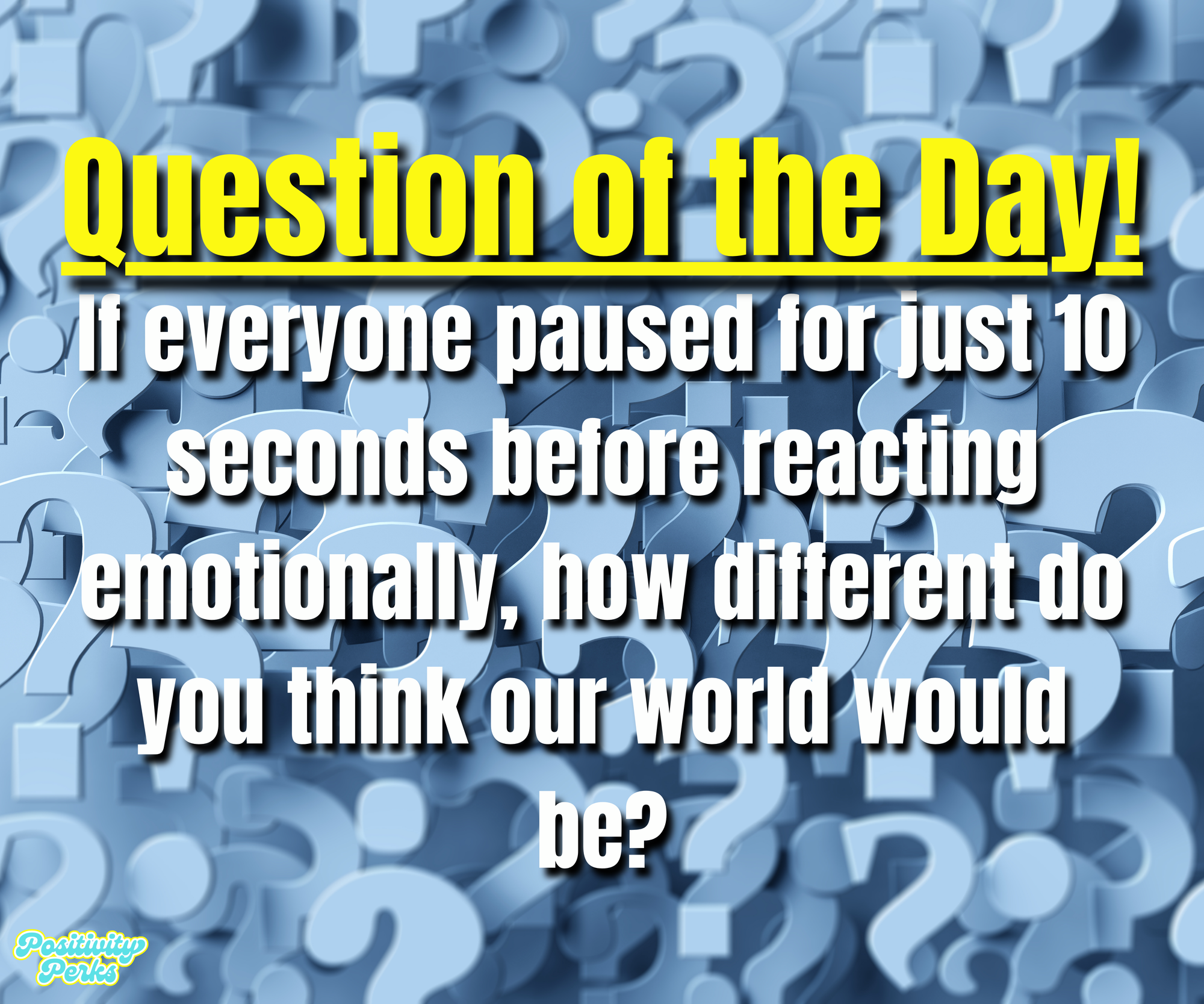
So the next time your brain hands you an emotional headline screaming in capital letters, don't reject it.
Don't suppress it.
Don't shame yourself for feeling it.
Simply smile—perhaps even laugh a little—and ask one beautifully disruptive question:
"Is this reality... or is this my brain making its best guess?"
That question creates space. And space is where wisdom quietly enters.
Because the goal isn't to eliminate emotion. The goal is to become bigger than your first reaction.
To recognize that your brain, for all its breathtaking brilliance, remains wonderfully, hilariously, undeniably human. It predicts. It assumes. It fills in blanks. It leaps to conclusions with Olympic-level enthusiasm.
You don't have to follow every leap.
You don't have to believe every story.
You don't have to become every emotion that knocks on your door.
You simply have to remember that your character is built not by what your brain invents in the first five seconds...
...but by what you choose to believe in the five minutes that follow.
And that choice—quiet, invisible, repeated thousands of times across a lifetime—is where genuine positivity is born.
Not from denying reality.
Not from pretending life doesn't hurt.
But from refusing to let your first emotional guess become your final destination.
Be positive and have a wonderful day!