
Your Partner Isn’t Your Oxygen Tank: The Brutal Truth About Clingy Love
The strongest couples aren't necessarily the ones who spend every possible minute together. They are often the ones who can separate without panic, reconnect without resentment, and sit beside one another in comfortable silence without feeling compelled to prove anything at all.


There is a point where wanting closeness stops being closeness. It becomes monitoring. It becomes the little interrogation after the little interrogation: Where are you? Who's there? Why didn't you answer? Are you upset with me? Are you sure? And then, because apparently the human brain enjoys making a difficult situation considerably more difficult, the person asking the questions often doesn't feel better when the answers arrive. Not for long, anyway. Reassurance works for a few minutes, perhaps an hour, and then the doubt creeps back through the side door wearing a different hat. Meanwhile, the other person starts feeling watched. Accountable for every minute. Guilty for wanting an afternoon alone. Exhausted from having to prove, again and again, that love hasn't mysteriously evaporated because they went to the grocery store without sending a status update. Let's call it what it is: love can become suffocating when anxiety is allowed to dictate the rules. The anxious partner isn't necessarily manipulative or malicious. Often, they're scared. Deeply scared. Their nervous system is looking for evidence that everything is still okay, and unfortunately, another human being can become the designated supplier of that evidence. But fear, even legitimate fear, doesn't get to run the household. It can explain the behavior. It cannot excuse everything.
And if you're the person on the other side of that dynamic, the one quietly fantasizing about sitting in a room alone with absolutely nobody asking what you're thinking, take a breath. You're not a bad partner because you need space. You are a person. You still have a mind that belongs to you, friendships that existed before the relationship, interests that don't require a romantic plus-one, and occasionally the profound desire to sit on the couch doing nothing more complicated than staring at the ceiling. This is not a character flaw. It is not evidence that you've fallen out of love. There is something wonderfully healthy about two people being able to occupy the same space without demanding each other's constant attention—and, sometimes, about being in different rooms altogether. One reads. One watches television. One cooks. The other disappears into a hobby. Nobody panics. Nobody starts constructing a murder mystery out of a closed bedroom door. That kind of ordinary freedom is underrated. Healthy love does not require constant participation. You don't have to be talking, touching, texting, laughing, or entertaining each other every waking second to prove the relationship is alive. In fact, if the relationship cannot survive a few hours of quiet, the problem probably isn't the quiet.
Still, space has to be handled like an adult thing, not wielded like a weapon. If you need two hours alone, say that. Don't announce, “I need space,” with the emotional warmth of a tax auditor and then disappear until tomorrow. Try something more human: I love you. My brain is fried. I need a couple of hours to myself, and I'll come find you at eight. Then come back at eight. That last part matters more than people realize. Predictability is incredibly powerful. A person who worries about being abandoned may not need some enormous romantic gesture; they may need you to do the small thing you said you would do. Call when you said you'd call. Follow through. Send an affectionate message before they have to beg for one. And when the double texts arrive, or the unnecessary argument suddenly appears because someone hasn't received enough attention, don't throw gasoline on it. Don't punish. Don't mock. Don't cave simply because conflict makes you uncomfortable. Calmly hold the boundary. “I love you. I'm not ignoring you. I'm also not going to have this argument right now.” There it is. No speech. No courtroom drama. No twelve-paragraph manifesto typed at 1:17 in the morning. A boundary doesn't need to be cruel to be firm.
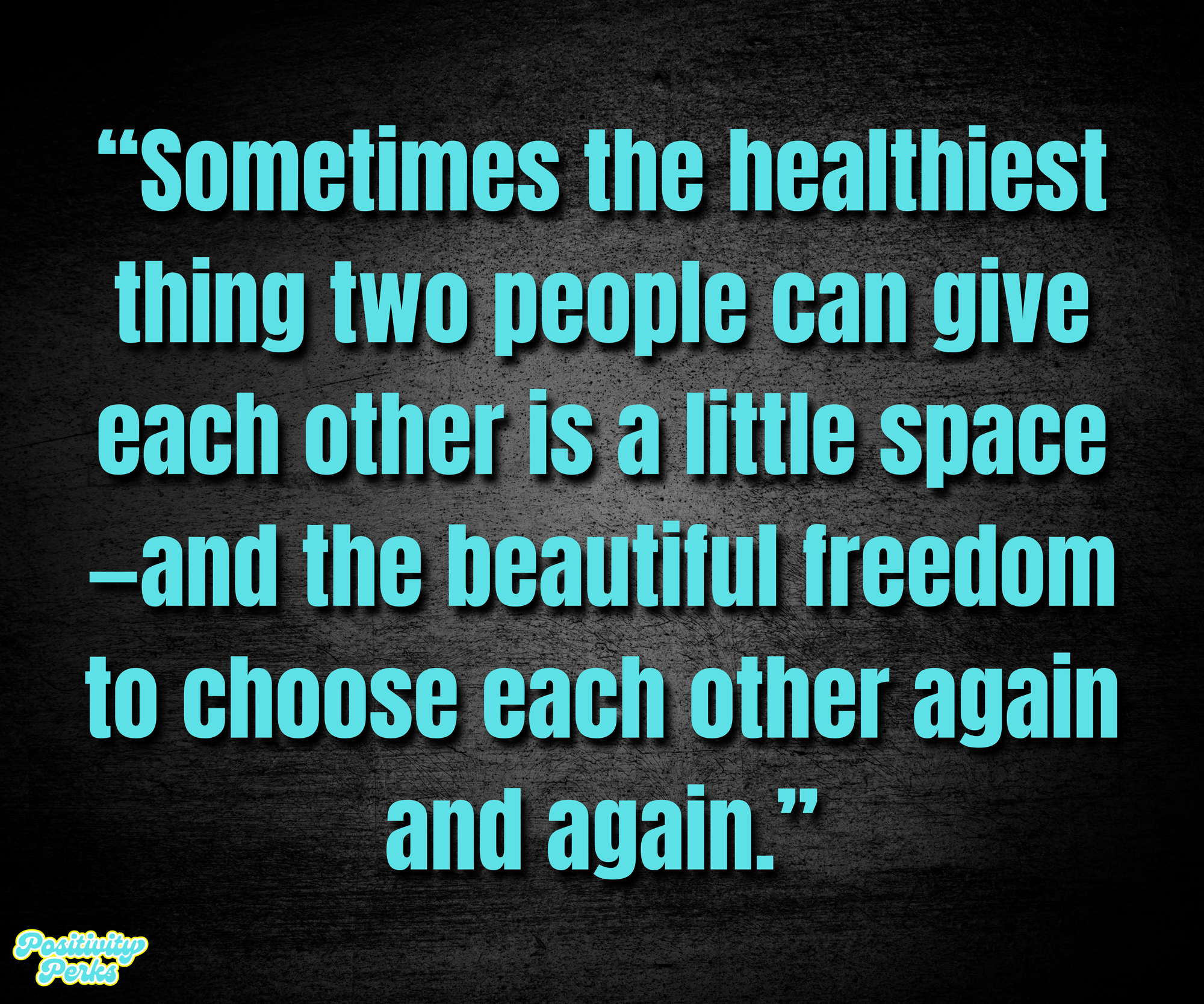
Eventually, every healthy relationship arrives at the same uncomfortable lesson: you cannot love another person into feeling permanently secure. You can love them well. You can be dependable. You can listen, reassure, apologize when you've actually done something wrong, and make the relationship a place where trust has a chance to grow. But you cannot spend your life plugging every hole in someone else's self-worth. That's too much responsibility to put on a partner, and frankly, it's too much responsibility to put on yourself. Build lives alongside each other rather than trying to build one enormous life in which neither person is allowed to exist separately. Have friends. Take the class. Go for the hike. Make something. Sit quietly. Let your partner do the same. Let there be a little mystery—not secrecy, but the healthy mystery of knowing that the person you love is still an individual, still becoming, still carrying parts of themselves that belong only to them. Love should be a place where you can breathe, not a place where you have to hold your breath. The strongest couples aren't necessarily the ones who spend every possible minute together. They are often the ones who can separate without panic, reconnect without resentment, and sit beside one another in comfortable silence without feeling compelled to prove anything at all. That's not distance. That's trust. And trust, unlike control, gives love somewhere to grow.
 Russell B
SUBSCRIBE FOR FREE TODAY!