
What If Their Leaving Had Nothing to Do With You At All?
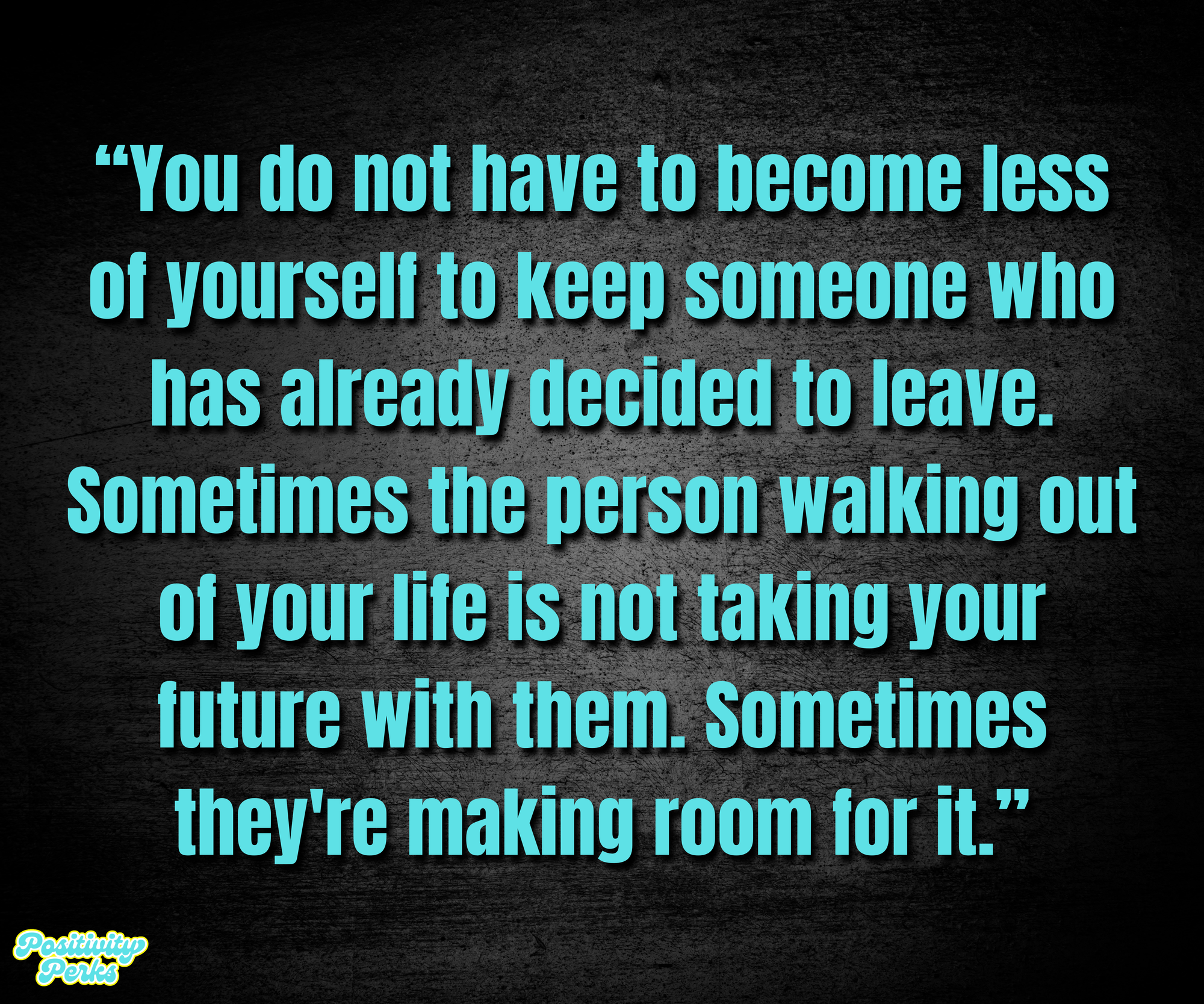
You do not have to become less of yourself to keep someone who has already decided to leave. Sometimes the person walking out of your life is not taking your future with them. Sometimes they're making room for it.


It has taken me the better part of a year to figure this out: There is a particular kind of heartbreak that doesn't arrive with slammed doors or dramatic final words. It arrives quietly. A text that doesn't come. A conversation that feels strangely different. The gradual realization that you are still standing in the same place, holding the same good intentions, while somebody else has already begun walking away. And because we're human—and apparently hardwired to put ourselves on trial—we start rummaging through the evidence. Was I too much? Not enough? Did I say the wrong thing? Should I have called? Should I not have called? Should I have been less available, less honest, less… me? We can turn a single goodbye into a full-blown congressional investigation if we aren't careful. But sometimes, the truth is far less dramatic and far more difficult to accept: you can do your best and still lose someone. You can love sincerely, show up faithfully, give people room to be imperfect, and mean what you say—and they can still decide to leave. It doesn't necessarily mean your love was misplaced. It doesn't mean the memories were fake. It doesn't mean you somehow failed the grand examination of human relationships. Sometimes people simply arrive at different conclusions about where they want to go next. That's it. No villain. No tidy explanation. No satisfying little bow tied around the ending. Just two people, once connected, discovering that the road ahead no longer looks the same.
We need to talk about something else, too, because this is where otherwise intelligent people do remarkably foolish things: we try to earn back what someone has already decided to give up. We explain. We apologize. We promise. We send the long message—the really long message, the one that begins with "I don't even know if I should be saying this" and somehow, twenty-seven paragraphs later, has become a small memoir. We bargain with memories. We replay conversations while brushing our teeth. We imagine better versions of ourselves who would have said the perfect thing at exactly the right moment. Stop. Just stop. There is a difference between taking responsibility and taking ownership of everything that went wrong. If you were wrong, say so. If you hurt someone, make amends. If you behaved badly, have the courage to look at that behavior without dressing it up in excuses. But don't spend your life apologizing for having a heart. You cannot persuade somebody to value what they have already decided not to value. And if keeping someone requires you to continually become smaller, quieter, easier, less demanding, less honest, less alive—then what you're preserving isn't a relationship. You're preserving access. Those are not the same thing.
This is where positivity gets misunderstood, especially by people who think optimism means walking around with a permanent grin while life throws furniture at your head. No. Positivity is not denial. It is direction. It is the decision that disappointment gets to visit but doesn't get to move in. You can be hurt and still be hopeful. You can be angry and still choose not to become cruel. You can miss somebody and understand, simultaneously, that having them back would not necessarily make your life better. Those contradictions are not evidence that you're confused; they're evidence that you're human. And some days, being positive won't look particularly inspirational. Some days it will look like getting out of bed, making coffee, answering the email, going for the walk, and refusing to check whether the person who left has suddenly remembered your existence. That's progress, even if nobody puts it on a motivational poster. There will be setbacks. Of course there will. A song. A photograph. A stupid little place you once stopped for breakfast. Memory is sneaky like that. It doesn't knock. It just walks in wearing muddy shoes. Let it. Feel what you feel. Then let the feeling leave when it's ready. You don't have to chase it, and you certainly don't have to build a monument to it.
So perhaps the better question isn't, "Why did they leave?" Perhaps it is, "Who am I becoming now that they have?" That question changes everything. Because when your intentions are genuine, you don't need to spend the rest of your life proving your goodness to someone who couldn't—or wouldn't—recognize it. Your character does not become less valuable because somebody failed to appreciate it. Keep your heart open, but don't leave the door unlocked for people who repeatedly prove they don't know how to enter without causing damage. Forgive, because bitterness is an exhausting roommate. Learn, because pain without reflection is just pain repeated. And walk away when you must, not with revenge in your pocket, but with your dignity intact. Maybe they lost you. Maybe you lost them. Maybe both of you lost something neither person fully understood until it was gone. Life is messy enough to allow all three possibilities. But here's what I hope you remember when the old doubts come knocking: you do not have to become less of yourself to keep someone who has already decided to leave. Sometimes the person walking out of your life is not taking your future with them. Sometimes they're making room for it. And sometimes—quietly, almost imperceptibly—you discover that the person you were so afraid of losing was never the person you most needed to keep. It was you.
 Russell B
SUBSCRIBE FOR FREE TODAY!